The short answer: you do not have to be on camera to publish. Someone who lands on your profile wants to understand what you do, how you solve their problem and whether they can trust you with it. All three fit in posts of hands at work, materials, results and words you wrote yourself.
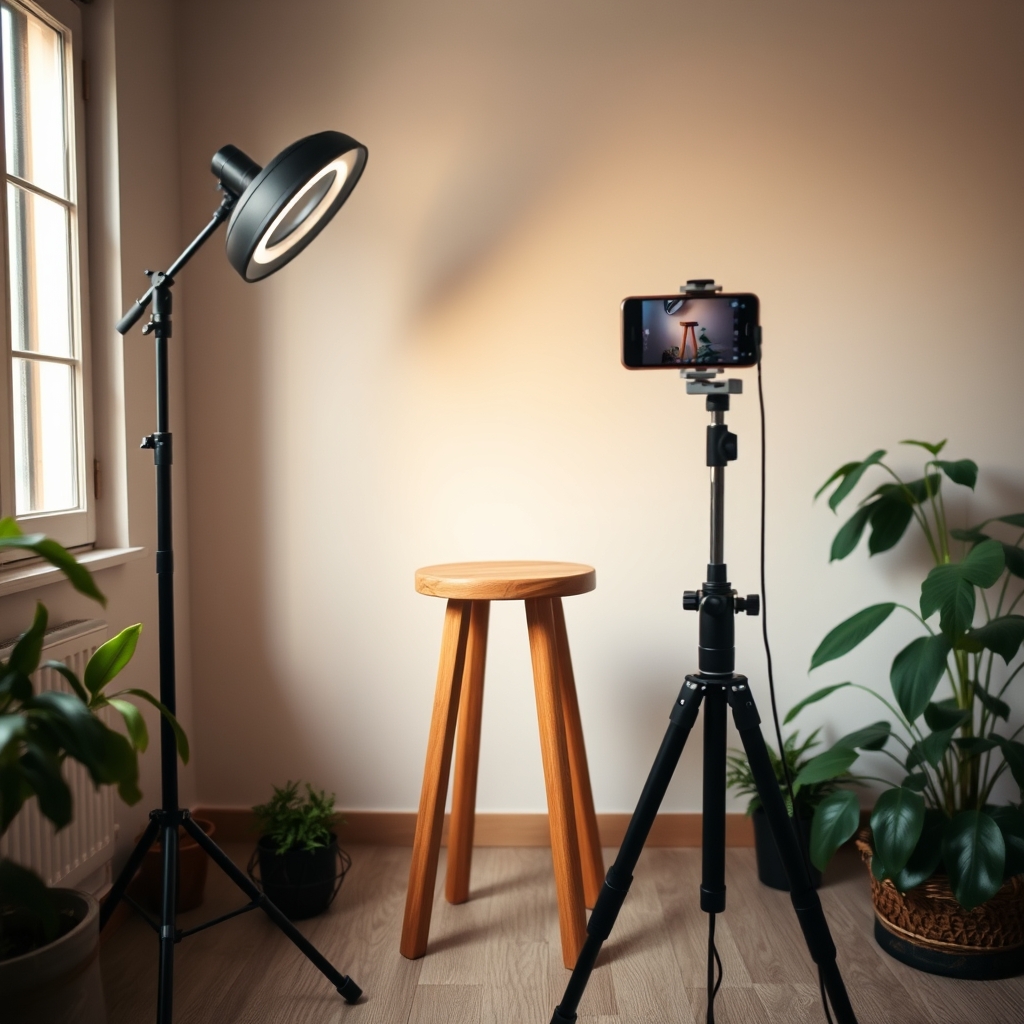
Here is how it often goes. You film something, you watch it back, you think you look odd, you delete it, and by Sunday you have published nothing. Posting without appearing beats not posting.
What you film instead of your face
You already have all of this on your phone, and none of it needs a good camera or a studio.
- Your hands at work. Prop the phone against anything that holds it still and film what you do, the way you do it.
- Materials and tools. The product you picked, the equipment you use, why it is that one.
- Before and after. Two photos from the same angle tell the whole story.
- Your screen. If your work happens on a computer, record the screen and talk through why you did it that way.
- The place where you work. The room set up before the client arrives, the car loaded for the day's job.
One example from our reference library of Reels, collected in August 2026: the Brazilian bridal shop @katianoivas posted how it cleans a wedding dress, a behind-the-scenes clip that, in our notes, shows nobody's face. The Reel reached 97,909 views, about nine times the profile's median.
If you cannot tell which of those becomes this week's post, the subject is often sitting in your recent client conversations, and we wrote about where to find subjects when it feels like you have nothing to post.
Your voice is still yours
Recording your voice is far easier than recording your face, and you can do it afterwards, unhurried, reading something you wrote first. The video shows the hands, the audio explains what is going on.
If you would rather not record your voice either, write on screen and take care with the caption. A well written carousel does the same job of explaining, and anyone who wants to read it again can save it.
What each kind of post turns into
| The post you would make on camera | The version without your face |
|---|---|
| You answering a common question to camera | A carousel with the question on the first slide and the answer on the next ones |
| A Reels about "3 mistakes people make" | The same script over footage of your work, with text on screen |
| A story talking about your day | A photo of what is on the bench right now, with one line over it |
| A video introducing yourself | A carousel with your service, who it is for and how booking works |
| A testimonial filmed with a client | A screenshot of the message they sent you, with their permission |
The profile has to show there is a person behind it
With no face in the feed, the rest of the profile carries that part. Write the bio in the first person and say your name. Reply in the DMs in your own words. Sign your captions. Explain why you took one route and not another on a job, because that is what shows there is someone with judgement behind the work.
A profile photo of you, even from a distance or side on, covers a lot of this, and it shows up small. If you prefer to skip that too, use a photo of your work instead of a stock logo. The profile also has to look like the same person in every post, and that subject is in how to keep a visual identity without becoming a designer.
The most common mistake
Disappearing completely. You take out the face and take out the first person along with it: captions turn into notices, the profile never says anyone's name, and the DMs answer like a form. Whoever lands there does not know who they are talking to, and leaving costs less than asking.
Keeping yourself out of frame is a decision about images. Carrying on saying "I" is what keeps the conversation standing.
When this does not hold
In some trades people hire you for the way you deal with them, and they want to see that before they book. Teachers, personal trainers and anyone working with children tend to feel that difference more. In those cases, posting without appearing still works to explain and to show your work, and on the day you feel like filming a quick story, it shortens the road to the first message.
If the choice is between posting without your face and not posting, post.
What you can do this week
- Today: pick one job from this week and set aside three photos you already took of it.
- Tomorrow: rest the phone against something solid and film one minute of your hands working, without saying anything.
- This week: write the caption in the first person, explaining the decision you made on that job.
- Before you publish: open your profile as if you were a new client and see whether you can tell who you are and what you do.
If what stops you is the time it takes to build each post, you can create content without spending the evening in an editor.
ZapPost delivers the carousel, the Reels script and the caption ready to go. No writing prompts, no Canva, no new tool to learn. You review and publish.
Frequently asked questions
Can I make Reels without appearing?
You can. Film your hands, the process, the materials or your computer screen, put the text over it and record the audio afterwards, reading what you wrote. The hook is still the first line, written or spoken.
Do I at least have to record my voice?
You do not. Text on screen and a well written caption explain just as well. Your voice helps with one thing: someone who has heard you arrives at the first message already knowing your manner, so that conversation starts further along.
Can I use stock photos instead?
You can, and the cost is a profile that looks like the others in your trade. Your own photo, taken on your phone, shows what you actually deliver. Keep stock images for backgrounds and for posts where your own photo is not possible.
What if I cannot show clients either?
Many trades have rules about client images, and they change with the professional body and the place you work in, so check with yours before you publish. In the meantime, show the process, the materials, your hands at work and the result with nobody in the frame.